
Discussions
Wordle: The Daily Dose of Delight and Deduction
In a world saturated with complex gaming experiences, a deceptively simple word puzzle emerged in late 2021 to capture the collective imagination: Wordle. Developed by Josh Wardle for his partner, this daily word game rapidly transcended its humble origins to become a global phenomenon, captivating millions with its elegant design and satisfying challenge. But what lies beneath the surface of this seemingly straightforward game that makes it so enduringly popular?
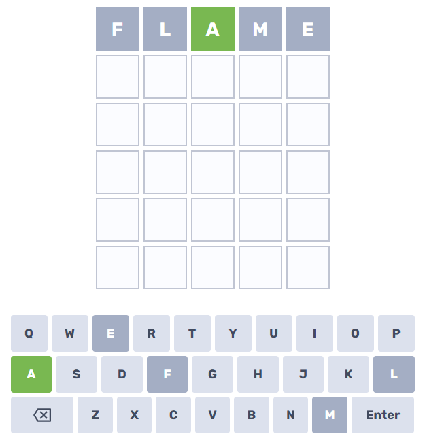
At its core, Wordle presents players with a single five-letter word to guess each day, offering six attempts to uncover the mystery. After each guess, the game provides immediate feedback: green squares indicate a correct letter in the correct position, yellow squares signify a correct letter in the wrong position, and grey squares denote letters not present in the target word. This immediate and clear feedback loop is a cornerstone of Wordle's appeal. It allows for continuous learning and strategic refinement, turning each incorrect guess into a valuable piece of information.
The brilliance of Wordle lies in its constraints. The five-letter limit, while seemingly restrictive, forces players to think strategically about common letter patterns and frequently used words. The six-guess limit, on the other hand, creates a delicate balance between challenge and achievability. It's enough attempts to feel like success is within reach, but few enough to make each guess count, fostering a sense of calculated risk-taking. This scarcity of attempts also fuels the "aha!" moment when the word is finally revealed, a satisfying burst of cognitive reward.
Beyond the mechanics, Wordle's social aspect has been instrumental in its widespread adoption. The ability to share results with friends and family using a spoiler-free grid of colored squares fosters a sense of shared experience and friendly competition. This communal element transforms a solitary puzzle into a daily ritual, a topic of conversation, and even a source of mild bragging rights. The simplicity of the shareable result also contributes to its virality, acting as a subtle, yet powerful, form of social proof.
Furthermore, Wordle taps into fundamental human desires for pattern recognition and problem-solving. Each game is a miniature detective story, where players piece together clues, eliminate possibilities, and apply logical deduction. The limited information at the start, gradually expanding with each guess, creates a compelling narrative arc within the game itself. This cognitive engagement, coupled with the low barrier to entry (no downloads, no accounts, just a website), makes it an accessible and rewarding mental exercise for people of all ages and technical proficiencies.
While some might argue that Wordle's popularity is a fleeting trend, its enduring appeal suggests something more profound. It's a testament to the power of well-designed simplicity, the joy of a shared experience, and the inherent satisfaction of a daily intellectual puzzle. In a world often characterized by overwhelming complexity, Wordle offers a refreshing respite, a small, delightful challenge that brings a moment.